
Best time to visit Mývatn for summer walks and midges
The best time to visit Mývatn is a choice between different interests, with summer insect activity and birdlife on one side and winter darkness and snow activities on the other. Avoid building the whole visit around a supposedly perfect month. Pick the landscape or activity that matters most, then leave flexibility for the conditions during your stay.
Mývatn's summer swarms include non-biting midges, while biting flies are a separate consideration. Regional guidance describes stronger midge hatches especially in early June and August. Biting flies can appear from early June, with another generation possible between July and September under suitable conditions. These are broad seasonal patterns rather than a calendar of exact hatch dates.
The insects are part of the lake's ecology, not simply an inconvenience to remove from the picture. Many breeding ducks feed on larvae and small crustaceans. If insect activity strongly affects your plans, keep your walking programme adjustable rather than choosing a single date on the assumption that the shore will be insect-free.
Waterbirds and considerate observation
Mývatn offers waterbird observation around places including Neslandavík, Álar, Laxá, Skútustaðir, Stakhólstjörn and Höfði. The regional guide names tufted duck and Eurasian wigeon near Neslandavík, with Barrow's goldeneye and harlequin duck along the Laxá. Treat those places as starting points for watching the landscape, with sightings depending on the visit.
Marked paths and wildlife protection rules shape how to explore Skútustaðagígar and Dimmuborgir. Avoid deliberately disturbing animals and keep geological formations and vegetation intact. Choose a position that lets birds continue their normal activity, rather than leaving the path for a closer photograph. The volcanic landscapes guide brings the walking options together.
A winter activity
The guided snowshoe walk offers a winter outing with equipment, instruction and transfers included.
Hand-picked tours, booked through GetYourGuide. Prices are indicative starting prices in euros (as of November 2026). Tap a tour for live availability and the current price in your currency.

A guided snowshoe outing for the winter season
Allow 3.5 hours for the outing, including transfers, equipment and an introduction; approximately two to three hours are spent on snowshoes with the guide.
Winter visits and northern-light conditions
Winter at Mývatn suits a trip built around seasonal activities and the possibility of dark-sky observation. Northern lights need darkness and a partly clear sky. Use the cloud forecast alongside aurora activity information, and treat an evening outing as an opportunity rather than a promised sighting.
The guided snowshoe outing lasts 3.5 hours overall, with approximately two to three hours on snowshoes. Equipment, an introduction, a guide and transfers are included. This is a winter activity to plan for suitable seasonal conditions, rather than a walking product available in every season. Personal insurance is extra.
For other ways to organise the season, compare Mývatn winter tours. Keep daytime walks and evening plans separate when allocating your energy and transport. A chosen outing is not permission to walk onto lake ice or to continue along a path that local conditions have made unsafe.
Roads and a realistic sightseeing plan
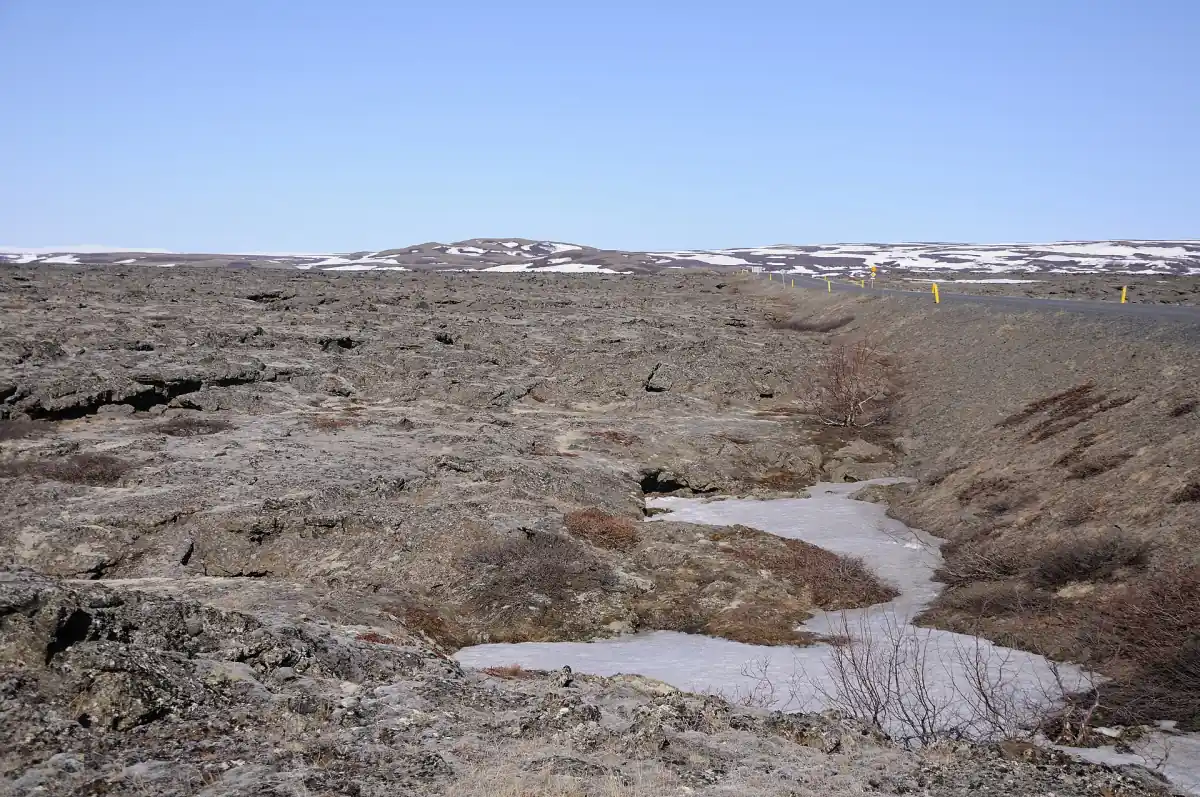
Hverfjall's approach road is often impassable in winter, while snow, ice and slush can make Dimmuborgir inaccessible on foot. Even a walk described as relatively easy becomes a different undertaking under ice. Base your choice on the actual route and conditions rather than applying a summer walking estimate to a winter day.
Dettifoss also needs seasonal road planning if you extend your trip. Road 864 on the east side is seasonal; road 862 on the west side has limited winter service. Choose the route with current road information rather than interpreting the road number as a promise of access. Compare the Diamond Circle options for different regional itineraries.
Bus-based travel needs a calendar as well as a weather plan. Route 56 runs on Mondays, Wednesdays, Fridays and Sundays in the September 2026 winter timetable. Coordinate arrival and departure with your accommodation base, and read the arrival guide before building activities around a bus day.
Mývatn weather forecasts and their limits
Mývatn weather planning works best with the local forecast and road reports close to the visit. Read cloud cover for an aurora evening and the conditions relevant to your chosen walk. A general climate description serves a different purpose from deciding whether a particular route is suitable today.
Keep local place names in view when using weather information: an Akureyri forecast or Reykjavík daylight time describes another location. Leave room to move a walk, shorten a sightseeing route or choose a guided seasonal outing. The goal is a workable visit built around your main interest, with alternatives that still fit your transport and accommodation.
Questions about choosing a season
Do all the insects around Mývatn bite?
No, Mývatn has non-biting midges as well as biting flies. Regional guidance describes stronger midge hatches especially in early June and August, while biting-fly activity has its own pattern. Treat these as broad seasonal tendencies and leave flexibility in your walking plans rather than relying on an exact insect-free date.
Does a winter visit guarantee northern lights?
No, northern lights at Mývatn require darkness and partly clear skies, with visibility depending on conditions during the evening. Read cloud cover as well as aurora activity information. Build your stay around daytime landscapes or a seasonal activity too, so an unsuccessful aurora evening is only one part of the visit.
How long is the guided snowshoe outing?
3.5 hours is the total duration of the guided Mývatn snowshoe outing, with approximately two to three hours on snowshoes. Equipment, an introduction, a guide and transfers are included. Plan it as a seasonal winter activity, and keep the remaining day flexible for transport, conditions and your accommodation arrangements.